Activities.
Days of week
 - Write the missing sound.
 - True or False?
 . -Write the days of the week in order.
 - Find the days of the week.
|
 |


Months of the year
Letra de la canción en inglés
January, February, March, and April
May, June, July, and August
September, October, November, DecemberThe months of the year
These are the months of the year
The months of the year
These are the months of the year
January, February, March, and April
May, June, July, and August
September, October, November, DecemberThe months of the year
These are the months of the year
The months of the year
These are the months of the year
January, February, March, and April
May, June, July, and August
September, October, November, DecemberThe months of the year
These are the months of the year
The months of the year
These are the months of the year
Letra de la canción en español.
Enero, febrero, marzo, abril,
Mayo, Junio, julio y Agosto,
Septiembre, Octubre, Noviembre, Diciembre.
Los meses del año.
Estos son los meses del año.
Los meses del año.
Estos son los meses del año.
Enero, febrero, marzo, abril,
Mayo, Junio, julio y Agosto,
Septiembre, Octubre, Noviembre, Diciembre.
Los meses del año.
Estos son los meses del año.
Los meses del año.
Estos son los meses del año.
Enero, febrero, marzo, abril,
Mayo, Junio, julio y Agosto,
Septiembre, Octubre, Noviembre, Diciembre.
Los meses del año.
Estos son los meses del año.
Los meses del año.
Estos son los meses del año.
Nationalities
Copiar y pegar el link en una pagina de internet y realizar la actividad propuesta.
https://www.englishexercises.org/makeagame/viewgame.asp?id=2122
2. Complete these sentences:
- I live in_______________. I am
Greetings (formal and informal)
Spanish |
English |
|---|---|
 perdón perdón |
pardon me or excuse me to get attention or seek forgiveness |
| con permiso |
excuse me |
| de nada |
your welcome |
| adios |
good bye (when you won't see them for awhile. |
| hasta luego |
see you later |
| chao |
bye |
| buenos noches, amigo |
good night friend |
| hasta mañana |
see you tomorrow |
| ?qué tal? |
how are you doing? informal |
| ?cómo estás tú? |
how are you? informal |
| ?Como está usted? |
How are you? formal greeting |
| Buenos días. ?Como estás? |
Good morning, How are you? |
| Bien, gracias, ?y tú? |
Fine, thank you. and you? |
| ?Cómo te llamas? |
What is your name? informal |
| ?Como se llamas usted? |
What is your name? Formal greeting |
| te presento a... |
Let me introduce you to... informal |
| Le presento a..... |
Let me introduce you to..... formal greeting |
| mucho gusto |
Nice / pleased to meet you. |
| Encantada / encantado |
I'm delighted to met you. Encantada said by female / encantado said by male |
| Me llamo ... |
My name is... |
| ?Donde vive? |
Where do you live? |
| vivo |
live / I live |
| usted vive |
you live |
| viven |
they live |
| ?Hay? |
are there / is there |
| hay |
there are / there is |
| ?sabes? |
Do you know that? |
| ?Cuantos...? |
how many...? masculine |
| ?Cuantas...? |
how many...? feminine |
| ?quieres...? |
Do you want...? |
| quiero... |
I want... |
Verb to be
El presente del verbo TO BE
Physical description
PHYSICAL DESCRIPTION
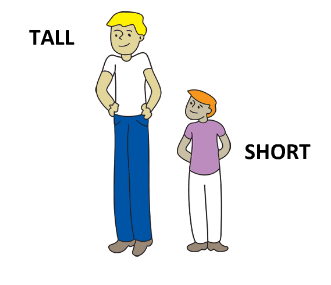 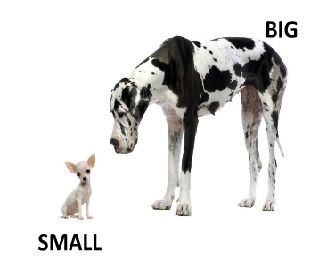 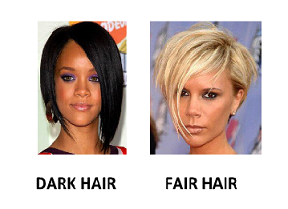 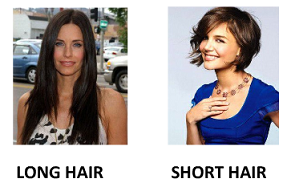 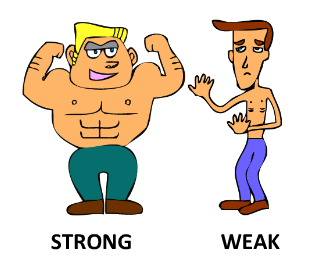 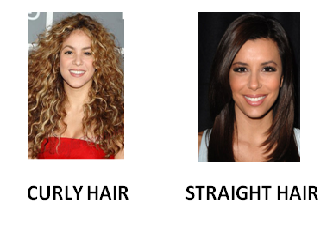
ORDER
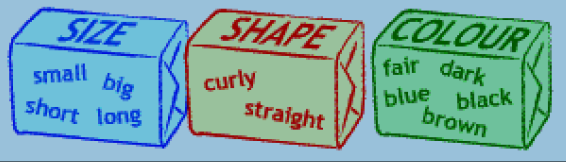 |
Listen the examples , complete the sentences and make the puzzle
https://www.englishexercises.org/makeagame/viewgame.asp?id=7824
Present progresive.
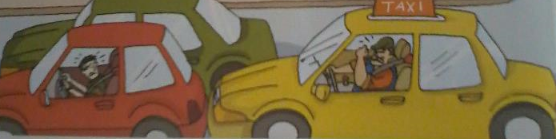
They're fighting in the cars
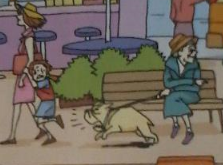
He's frightening for the bulldog

I'm boring in the work
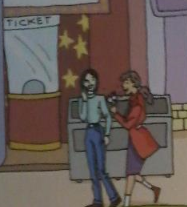
She's waiting the movie
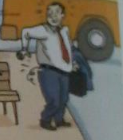
He's got a expelling a gas
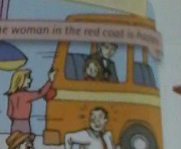
She's greeting the friends
Simple present
Simple Present – Exercise 01
Simple past
Put the verbs into the simple past:
- Last year I (go) to England on holiday.
- It (be) fantastic.
- I (visit) lots of interesting places. I (be) with two friends of mine .
- In the mornings we (walk) in the streets of London.
- In the evenings we (go) to pubs.
- The weather (be) strangely fine.
- It (not / rain) a lot.
- But we (see) some beautiful rainbows.
- Where (spend / you) your last holiday?
Write the past forms of the irregular verbs.
| Infinitive | Simple Past | |
|---|---|---|
| 1. |
meet
|
.
|
| 2. |
drive
|
.
|
| 3. |
speak
|
.
|
| 4. |
put
|
.
|
| 5. |
write
|
.
|
| 6. |
sing
|
.
|
| 7. |
do
|
.
|
| 8. |
sit
|
.
|
| 9. |
stand
|
.
|
| 10. |
run
|
.
|
Complete the table in simple past.
| Affirmative | Negative | Interrogative |
|---|---|---|
|
He wrote a book.
|
|
|
|
|
He did not sing
|
|
|
|
|
Was she pretty?
|
Put the sentences into simple past.
- We move to a new house. →
- They bring a sandwich. →
- He doesn't do the homework. →
- They sell cars. →
- Does he visit his friends? →
Write sentences in simple past.
- Janet / miss / the bus →
- she / tidy / her room →
- Nancy / watch / not / television→
- she / read / a book →
Choose "Was“ or "Were“:
- The teacher nice.
- The students very clever.
- But one student in trouble.
- We sorry for him.
- He nice though.
Present perfect
|
|


Exercise on Future I Simple (going to)
MODAL VERBS
EJERCICIOS
· Elije can o can’t si es posible. Si no, elige could o will be able to.
1. I’m sorry, I take you to the airport in the morning because I’ve got a business meeting at 9 o’clock.
2. I think I pass my driving test before my 50th birthday.
3. One day in the future I think we live on the moon.
4. If we left now, we before the shops close.
5. I’m not working this weekend so we go cycling on Sunday.
6. I meet you for coffee at 11, but I’ll only have fifteen minutes.
7. I’ll do the washing and the ironing, but I do the shopping.
8. If we worked together, we finish it before the film starts.
9. She was bad after the accident, but I think she go back to work next week.
10. It’s not possible yet, but I think computers do the housework for us in a few years.
11. I go for a run this evening. My parents are coming to visit and I won’t have time.
12. I do your job. It’s so complicated and stressful.
|
Help:
to pass = aprobar |
 |
¡OJO!
No utilizamos el could cuando hemos conseguido hacer algo por algo una sola vez. En estas ocasiones decimos managed to o succeeded in.
|
Ej.) It wasn’t easy, but I |
|
 managed to succeeded in buying |
|
| No fue fácil, pero conseguí comprar una entrada para el concierto de Eminem. | |
EJERCICIOS
· Elige could, couldn’t o managed to
1. I play the piano when I was four.
2. They to get to the top of Mt. Kilimanjaro, but it took them six days.
3. Eventually Luis convince me that there’s no future in teaching English.
4. Mark wanted to see the final of the European Cup, but he get tickets.
5. Henry was so advanced for his age that he burn music CD’s when he was 8 months old.
6. Val and John were amazed that they to drive over the Pyrenees in such an old car.
7. I spoke to her for more than an hour, bought her a drink, and finally get her phone number.
8. Carlos speak English when he was six years old. His parents are from Liverpool.
9. Cathy grew up near the beach in South Africa. She swim, sail and dive when she was very young.
10. Danny lost his job at the clock factory because he get up on time in the mornings.
|
Help:
sail = paseo en barco |
|
Modal Verbs – can, should, must
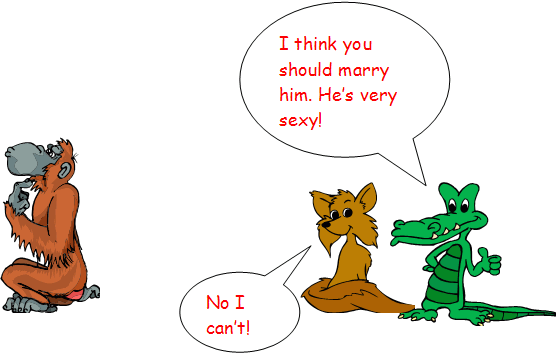
Relaciona las frases con sus significados:
1. I think you should marry him. He’s very sexy!
2. You can marry him if you really love him.
3. You shouldn’t marry him because you don’t love him.
4. You can’t marry him, he’s already married!
5. You must marry him, you’re pregnant!*
6. You mustn’t marry him. If you do it’ll be the biggest mistake of your life!
*pregnant = embarazada
Ahora escribe must/mustn’t/should/shouldn’t/can o can’t en el espacio adecuado.
1. Se utiliza para decir que algo es posible.
2. Se utiliza para decir que algo no es posible.
3. Se utiliza para aconsejar a alguien hacer algo.
4. Se utiliza para aconsejar a alguien no hacer algo.
5. Se utiliza para ordenar a alguien hacer algo.
6. Se utiliza para ordenar a alguien hacer algo.
Past Simple Activities
 Click on link to see more information on person saying the verbs vocabulary.
 Para más información sobre la persona que pone su voz a la actividad consultar el enlace.
Activity and sounds by Steven Starry - Alcorcón, Villaviciosa, Leganés
If you pause with the mouse icon over the image and wait for a moment, you will see a text box with the vocabulary word. Notice that the past simple form of regular verbs simply has an "-ed" ending. Si detienes el ratón sobre cada imagen y esperas un momento te saldrá un recuadro de texto que te indicará la palabra a que hace referencia la imagen. Nota que la forma del pasado simple de verbos regulares simplemente tiene una terminación de "-ed". Double click on each button under each image to hear the sound. Haz doble click en el botón que hay bajo cada imagen para escuchar su sonido. On your keyboard in all "Hotpotatoes" activities: click on the keys "CTRL" and "+" or "-" at the same time to change the size of the activity on your screen. En todas las actividades de "Hotpotatoes": haz click en las teclas "CTRL" y "+" o "-" del teclado para cambiar el tamaño de la actividad.|
|
|
|
|
 |
 |
 |
 |
|
|
|
|
|
|
|
|
|
|
 |
 |
 |
 |
|
|
|
|
|
|
|
|
|
|
 |
 |
 |
 |
|
|
|
|
|
|
|
|
|
|
 |
 |
 |
 |
|
|
|
|
|
|
|
|
|
|
 |
 |
 |
 |
|
|
|
|
|
|
|
|
|
|
 |
|||
|
|
|||
|
|
|
|
|
 Worksheets:
Print them (imprimelos): Print Past Simple Activities Pictures List without words, Print Past Simple Activities Pictures List with words.
More Exercises:
Grammar:
|
 How do you learn a language? (¿Como se aprende un idioma?) Actividades para aprender inglés basados en un extracto de un artículo de Wikibooks por el profesor de inglés
 Jupiter - actividades para aprender inglés basados en un extracto de un artículo de Wikipedia sobre al planeta Jupiter por el profesor de inglés
